Annoucement : Welcome to visit our website, Any inquiry, please check CONTACT US. Payment related business, please confirm with our salesman, Have a nice visit trip.
Views: Author: SCBN TOOLS Publish Time: 2025-11-11 Origin: Site
In the field of machining, cutting tools, as the “teeth of industry”, directly determine machining efficiency, product precision, and production costs. Ceramic inserts once held an important position in the machining of hard materials due to their high hardness and high temperature resistance. However, with the maturity of CBN material technology, CBN inserts have become the ideal replacement for ceramic inserts with their superior overall performance—especially in high-hardness, high-precision, and continuous production scenarios, where this replacement has moved from “optional” to “necessary”.
I. Limitations of Ceramic Cutting Tools
First, they have poor impact resistance, easily chipping under intermittent cutting or impact load conditions, leading to production interruptions.
Secondly, its wear resistance is limited. When machining gray cast iron, the hard carburized material in the workpiece will cause abrasive wear, resulting in short tool life and frequent tool changes, which affects both efficiency and accuracy.
Third, they have insufficient thermal stability. At high-speed cutting (Vc> 200m/min), high-temperature wear easily leads to dimensional drift, making it difficult to meet the tolerance requirements of precision parts.


II. Core Advantages of CBN Inserts as a Replacement for Ceramic Inserts
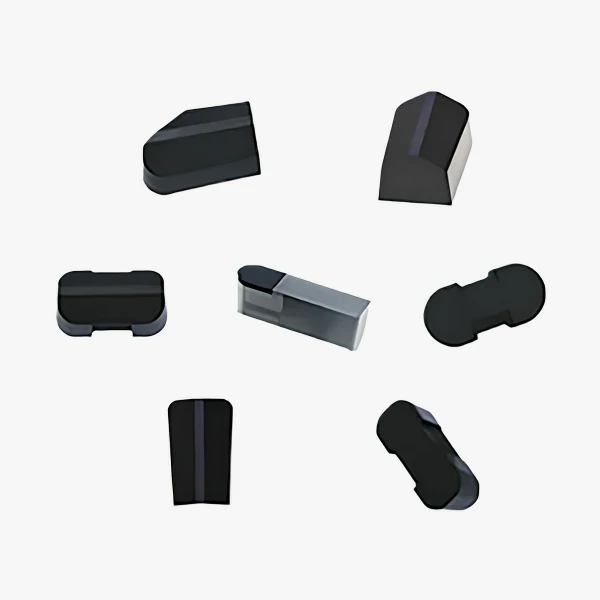
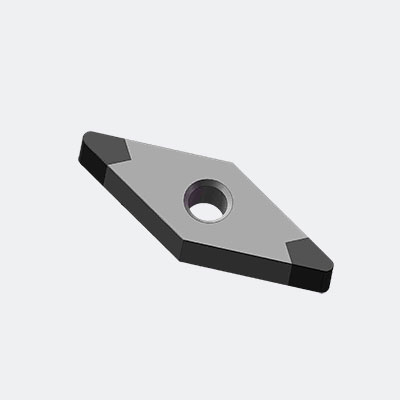
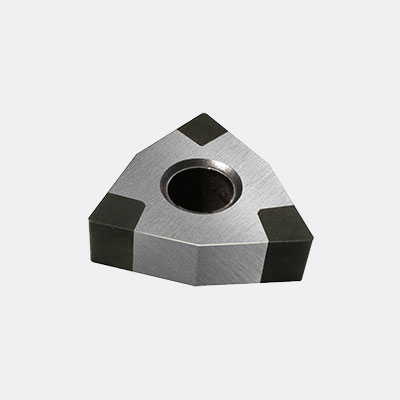
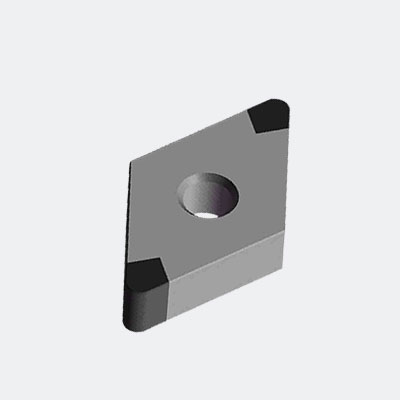
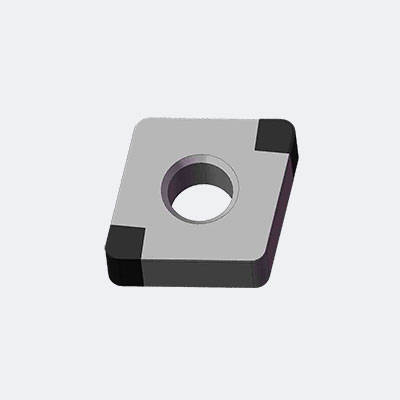
SCBN TOOLS CBN inserts, as a representative of super hard tool materials, perfectly make up for these shortcomings.
1. Hardness second only to diamond, with wear resistance 3-5 times that of ceramic inserts.
2. Excellent high-temperature resistance, maintaining stable cutting at 1300℃, suitable for high-speed cutting scenarios.
3. Better toughness, with significantly better impact resistance than ceramic inserts, capable of handling complex working conditions such as interrupted cutting.
III. Typical Alternative Scenarios
1. Multi-material machining scenarios
When machining both gray cast iron and hardened steel in the same process (such as the cylinder head inlay), ceramic inserts are prone to chipping or rapid wear due to insufficient toughness and limited material compatibility; while CBN inserts are compatible with machining a variety of hard materials, eliminating the need for frequent tool changes.
2. Interrupt Cutting and Impact Loading Conditions
Gray cast iron castings may have sand holes, air holes, or surface scars. When machining interrupt cutting structures such as steps and grooves, ceramic inserts are brittle and prone to chipping. CBN inserts have higher bending strength and impact resistance 2-3 times that of ceramics, which can avoid failure caused by impact.
3. High-Speed Cutting and Mass Production
SCBN TOOLS CBN inserts are adapted to high-speed cutting rhythms, offering a significantly longer lifespan than ceramic inserts in mass production, reducing tool change costs and thus improving efficiency. Although the initial purchase cost is 2-3 times that of ceramic inserts, it can ultimately reduce the cost per piece by 15%-25%, achieving a high return on investment.
This precise performance and adaptability to various scenarios make CBN inserts the inevitable choice for replacing ceramic inserts in demanding machining applications.
Address : No. 11, Ruida Road, high tech Zone, Zhengzhou, Henan, CHINA
Tel : +86-13271567751
Fax : +86-0371-56705820
E-mail :scbntools@gmail.com
WeChat: scbntools annachina6